
By 2026, Blue Lock is expected to complete its transformation from a controversial football experiment into a global-scale narrative. The early stages of the series were built around isolation, elimination, and internal conflict among Japanese strikers. However, all narrative signals point toward a much broader scope—one that places Blue Lock’s philosophy under international scrutiny.
This transition is significant because it forces the story to confront its own ideology. Ego-driven football worked inside the controlled environment of Blue Lock, but the world stage introduces new variables: different football cultures, tactical traditions, and psychological pressures. In 2026, Blue Lock is likely to ask a harder question—not whether ego creates strong strikers, but whether it can survive global competition.
The Redefinition of Ego Under International Pressure
One of the most important predictions for Blue Lock in 2026 is a redefinition of ego itself. Up to this point, ego has been framed as a positive force—self-belief, decisiveness, and the courage to take responsibility. However, facing international opponents may expose the limits of unchecked ego.
Future arcs may explore ego as both strength and weakness. Players who rely solely on self-centered dominance could struggle against disciplined teams or adaptive systems. This narrative direction would deepen the series thematically, transforming ego from a slogan into a complex psychological tool that must evolve to remain effective.
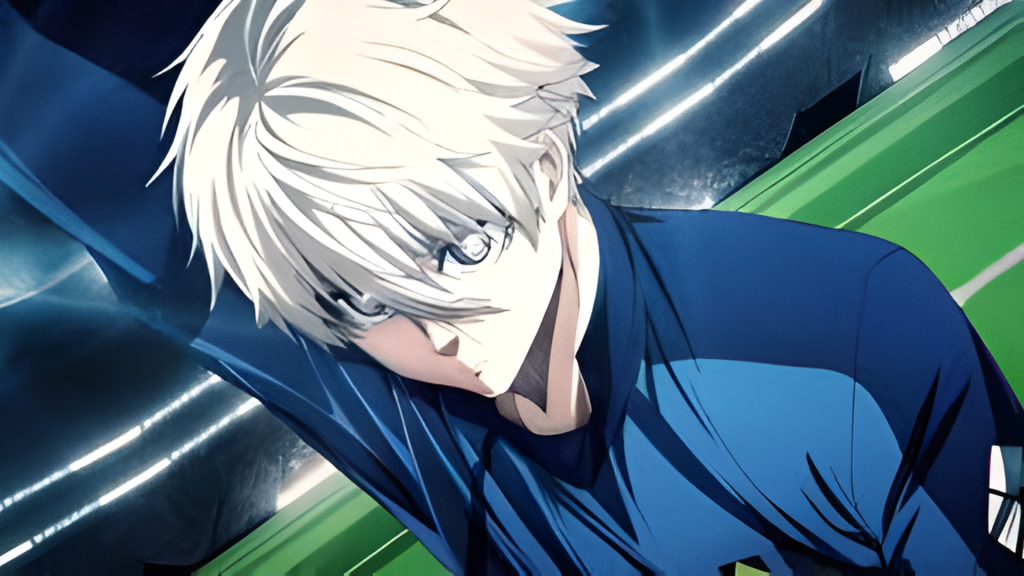
Isagi’s Role as a Catalyst Rather Than a Traditional Ace
In 2026, Yoichi Isagi is unlikely to become a conventional superstar striker defined by goals alone. Instead, the anime may position him as a catalyst—someone whose presence reshapes the flow of the game. His greatest weapon has always been awareness, and this trait becomes even more valuable in high-level football.
Rather than outshining everyone individually, Isagi may begin to dictate tempo, positioning, and momentum. This would allow Blue Lock to maintain its core philosophy while avoiding predictable power escalation. Isagi’s growth would remain psychological and strategic, reinforcing his role as the ideological center of the series.
Supporting Characters Facing Identity Crises
Another likely development in 2026 is deeper internal conflict among supporting characters. As the competition intensifies, characters like Rin, Nagi, Barou, and others may face identity crises. Skills that once guaranteed dominance may no longer be enough, forcing them to re-evaluate who they are as players.
These struggles are essential for maintaining narrative tension. Rather than simply leveling up abilities, Blue Lock may focus on characters confronting failure, doubt, and reinvention. This approach aligns with the series’ psychological roots and prevents stagnation in long-running sports narratives.
A Darker, More Mature Psychological Tone
As Blue Lock matures, its tone in 2026 is likely to become darker and more introspective. The thrill of survival games may give way to exhaustion, fear of irrelevance, and the pressure of representing a nation. Ego, once empowering, could become isolating.
This tonal shift would reflect real-world elite sports, where success often comes with immense psychological cost. Exploring burnout, loss of motivation, and mental collapse would elevate Blue Lock beyond competition-driven storytelling into a study of ambition and identity.
Visual Storytelling and Symbolism Will Intensify
From a production standpoint, Blue Lock in 2026 is expected to lean even further into symbolic animation. Instead of focusing purely on realistic football choreography, future seasons may emphasize mental states through exaggerated visuals, distorted perspectives, and abstract imagery.
This evolution suits the series’ identity. Football in Blue Lock has always been a metaphor for dominance, control, and self-definition. Enhancing symbolic visuals allows the anime to communicate complex psychological shifts without relying solely on dialogue.
Blue Lock’s Long-Term Place in Anime Culture
By 2026, Blue Lock is poised to secure its place as more than just a popular sports anime. Its influence on discussions about individualism, competition, and success already extends beyond anime communities. If the series continues to challenge its own ideas, it may earn recognition as one of the most philosophically ambitious sports anime ever produced.
The key to this legacy lies in evolution. Repetition would weaken its impact, but thoughtful reinvention could transform Blue Lock into a long-term cultural reference point.
Final Thoughts
The future of Blue Lock in 2026 appears bold, demanding, and psychologically complex. Rather than escalating through spectacle alone, the series seems prepared to interrogate its own foundations—ego, ambition, and identity—on a global stage.
If these predictions hold true, Blue Lock will continue to stand apart from traditional sports anime. Its strength lies not in predictable victories, but in its willingness to explore what happens when ambition is pushed to its absolute limit. For fans, 2026 may represent not just the next chapter, but the most meaningful evolution of Blue Lock so far.
👉 If you are a fan of Blue Lock, you can find and purchase merchandise inspired by the series at Official Blue Lock Merchandise: bluelockgifts.com
